
Introduction
In its steady pursuit of educational excellence, Bahrain Polytechnic has emerged as a leading institute in applied higher education in the Kingdom of Bahrain. Recently, BP added another feather to its cap by obtaining accreditation from Global Standardization And Accreditation Agency (GSAAA). This international recognition not only validates the quality and rigor of Bahrain Polytechnic’s academic offerings but also yields enhanced global credibility and trust — a substantial stepping stone for both the institute and its students.
With this blog post, we shed light on what BP stands for, what this GSAAA accreditation represents, and why it matters for prospective students, employers, and the institution’s future.
What is GSAAA and Why Its Accreditation Matters
GSAAA is a non-profit global quality assurance and accreditation body dedicated to assessing educational institutions worldwide. It issues accreditations based on robust standards covering academic quality, infrastructure, faculty competence, institutional governance, and assurance of continuous improvement.
Accreditation from GSAAA matters for several reasons:
- It signals to students, parents, and employers that an institution meets internationally recognized benchmarks of academic and institutional quality.
- It enhances global recognition of degrees and credentials offered by the institution — important for graduates aiming for further education or employment overseas.
- It strengthens institutional reputation and provides assurance that the institute is committed to ongoing quality improvement, transparency, and educational excellence.
For Bahrain Polytechnic, GSAAA accreditation is a profound milestone — reaffirming its mission to produce work-ready, professionally competent graduates through applied, industry-relevant programs.
About Bahrain Polytechnic — Background, Vision & Mission
Bahrain Polytechnic was established in 2008 by a Royal Decree (No. 65 of 2008) issued by His Majesty King Hamad bin Isa Al Khalifa. The Polytechnic was created to address the Kingdom’s need for a skilled national workforce and to support Bahrain’s economic diversification as part of the broader national development plan.
The institution is overseen by a Board of Trustees, empowered to grant certificates and qualifications in various disciplines. The first batch of bachelor graduates completed their studies in July 2013.
BP’s educational philosophy centers around producing “professional and enterprising graduates with 21st century skills” — ready to meet the demands of modern industry, both locally and regionally.
BP envisions itself as “a world-class provider of applied higher education,” grounding its mission on excellence, learning, and innovation.
This foundation makes Bahrain Polytechnic a natural candidate for global accreditation — aligning its curriculum, teaching methodology, and institutional values with international standards.
Academic Structure & Programmes — What BP Offers
Bahrain Polytechnic offers a broad range of academic and professional programmes across multiple schools/faculties, catering to the diverse needs of Bahrain’s economy and global industries. Some key schools and programmes include:
- School of Business — with streams like Accounting, Banking & Finance, Management, HR, Marketing, FinTech, etc.
- School of Logistics & Maritime Studies — Global Logistics Management, Maritime Transport Management.
- School of Engineering — offering various engineering-related courses.
- School of Information & Communications Technology (ICT) — covering software development, networks, cybersecurity, and more.
- School of Creative Media — programs such as Graphic Design, Media Production, Web Media, Visual Design, etc.
- Preparatory/Foundation Programmes, Top-up programmes, Continuing Education, and Apprenticeship & Industry-linked Programmes to ensure flexibility and relevance.
A distinctive feature of BP’s academic approach is its emphasis on applied learning: programmes are developed in consultation with industries, businesses, and international institutions — ensuring graduates are work-ready and equipped with relevant technical and professional skills.
The learning methodology incorporates problem-based learning (PBL), work-integrated learning (WIL), internships, real-world projects, group work, and employability skills integrated across the curriculum — all aimed at producing graduates who can immediately contribute in professional environments.
Campus, Facilities & Student Life at Bahrain Polytechnic
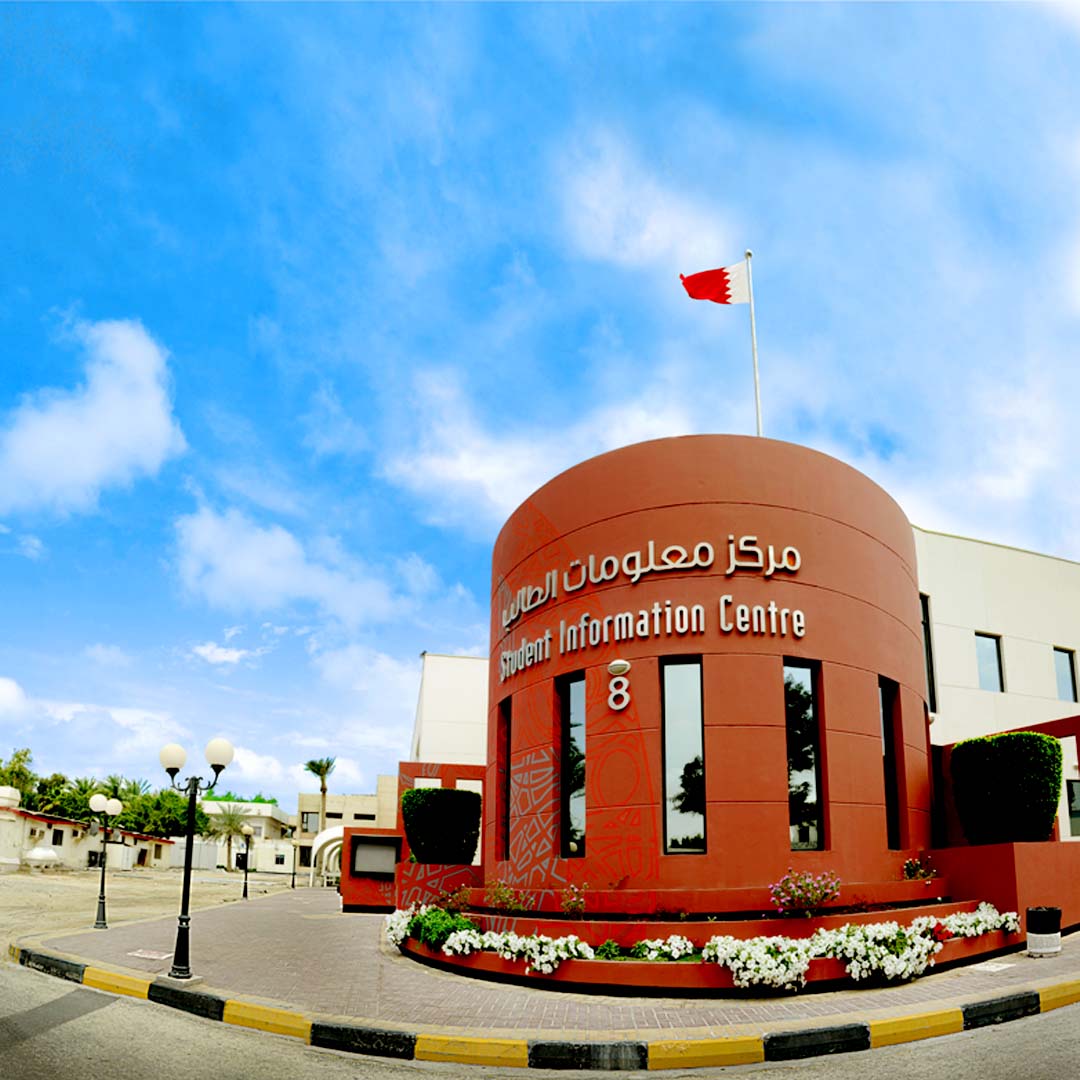
Bahrain Polytechnic campus is located in Isa Town, within the educational district. Currently, the campus is shared with University of Bahrain (UoB)’s Engineering and Applied Sciences Colleges — though plans exist for BP to eventually take over the full campus as UoB moves to its main campus.
The campus occupies roughly 19,500 m² across multiple buildings, catering to classrooms, IT labs, engineering workshops, administrative offices, student areas, recreational spaces, and more.
Facilities include:
- Classrooms (with capacity for 15–35 students), well-equipped labs and engineering workshops.
- Dedicated student lounges/clubs, recreational spaces (including areas for games, group activities, and socializing), lockers, and student-friendly amenities.
- Cafeterias and small food outlets offering snacks and refreshments to students.
- A large multipurpose hall (often used for events, seminars, etc.), with seating capacity for more than 700 attendees.
- Support services including library/learning centre, ICT services, career & employment centre, student support and welfare services, facilities for students with disabilities, and more.
All these elements together make BP not just an academic institution, but a holistic environment for learning, community, innovation, and personal development.
What GSAAA Accreditation Means for Bahrain Polytechnic & Its Students
With GSAAA’s accreditation, Bahrain Polytechnic gains a globally recognized validation of its academic quality, institutional strength, and commitment to continuous improvement. This recognition can lead to several positive outcomes:
- International Credibility & Recognition: Students graduating from BP now hold credentials that are more likely to be accepted internationally, which helps with further studies, transfers, or employment abroad.
- Enhanced Trust Among Stakeholders: For prospective students, parents, employers, and partner institutions — the GSAAA seal acts as a guarantee of quality, transparency, and rigor.
- Institutional Reputation & Competitive Edge: In a global higher-education landscape, having international accreditation distinguishes BP among regional and global institutes — potentially attracting more applicants, collaborations, and partnerships.
- Motivation for Continuous Improvement: Accreditation pushes institutions to maintain and improve teaching standards, infrastructure, student support, and quality assurance systems — ultimately benefiting current and future students.
Moreover, for a polytechnic focused on applied skills, industry alignment, and employability — this global recognition adds significant value and legitimacy to the “work-ready” promise BP offers.
Bahrain Polytechnic’s Success Story: From Government Initiative to Global Recognition
Bahrain Polytechnic is more than a college — it is a strategic national initiative envisioned to support Bahrain’s economic diversification by providing a skilled workforce aligned with labor market needs.
Since its inception in 2008, BP has steadily evolved: introducing bachelor degrees, diversifying its academic offerings, forging industry linkages, embedding applied learning practices, and gradually building reputation and infrastructure.
This GSAAA accreditation marks a new chapter — one where BP steps into the international arena, demonstrating that an institute from the Gulf region can meet global academic standards. It’s a journey of vision, commitment, strategic planning, and consistent execution.
What Students & Stakeholders Should Know / Watch Next
As promising as this development is, some considerations and next-steps are worth keeping in mind — to maximize benefits and ensure long-term impact:
- Check Recognitions: While GSAAA accreditation adds value, prospective students should check whether foreign universities or employers accept GSAAA-accredited degrees, since recognition policies vary by country and institution.
- Monitor Continuous Quality: Accreditation is not a one-time achievement — maintaining standards, updating curriculum, improving infrastructure, and sustaining institutional commitment to excellence is crucial.
- Leverage Opportunities: Graduates and current students should leverage the accreditation to seek international collaborations, further studies abroad, internships/employment internationally or regionally.
- Institutional Transparency & Growth: BP should continue sharing progress, outcomes, industry partnerships, and graduate success stories — to fully capitalize on the accreditation and build further trust.
Conclusion
Bahrain Polytechnic’s journey — from a national government-established polytechnic to a globally accredited institute — is truly commendable. The GSAAA accreditation represents not just a certificate, but a seal of quality, commitment, and global relevance for BP.
For students, this means better prospects — academically, professionally, and globally. For the institution, it marks the beginning of a broader international presence and responsibility to uphold standards of excellence.
As BP moves forward, this accreditation should serve not as an endpoint, but a foundation — a platform for continuous improvement, innovation, and global engagement.


